
Explore how product variety, flexible formats and sustainable materials are reshaping cookie and cracker packaging lines.
Key takeaways
- Reformulated products call for gentle handling throughout the packaging process.
- Pack sizes reflect local markets, with different pack styles and a wide range of weights.
- Format flexibility is critical to line productivity.
- Mono-materials introduce additional technical requirements.
- The packaging line is becoming an ecosystem in which intelligent technologies, digital features and service ensure stable production.
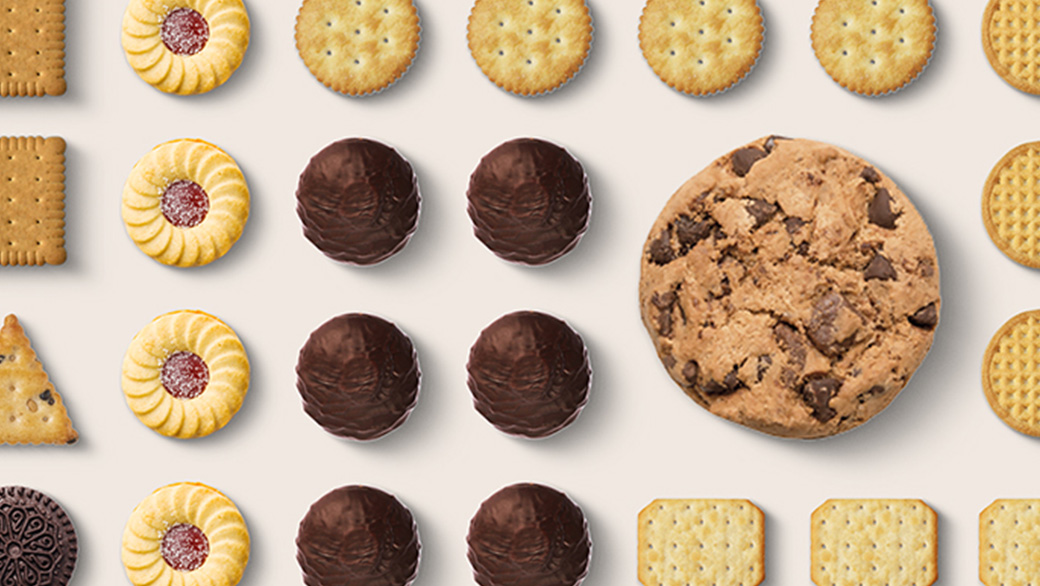
Consumers are finding more choice on the shelves than ever before: reduced-sugar varieties, high-protein recipes, gluten-free and vegan products, filled cookies, seeded crackers, premium biscuits with visible ingredients, single portions and multipacks. What consumers experience as variety can quickly become a complex production challenge. This is where packaging technology becomes a competitive advantage.
„One of the biggest drivers is the way recipes are changing. Products are becoming healthier – with less sugar, more fibre and more protein.“
Daniel Bossel, Global Product Manager at Syntegon
New formulations can make cookies more brittle, crackers more delicate, fillings softer and surfaces more irregular. At the same time, consumers are increasingly drawn to a handcrafted look: visible ingredients and individual shapes convey quality and a premium feel. For the packaging line, this means delivering high output while keeping handling controlled and gentle.
Gentle handling has therefore become a key requirement. The more delicate the product, the more important the interaction between every stage of the line – from feeding and distribution to grouping and secondary packaging.
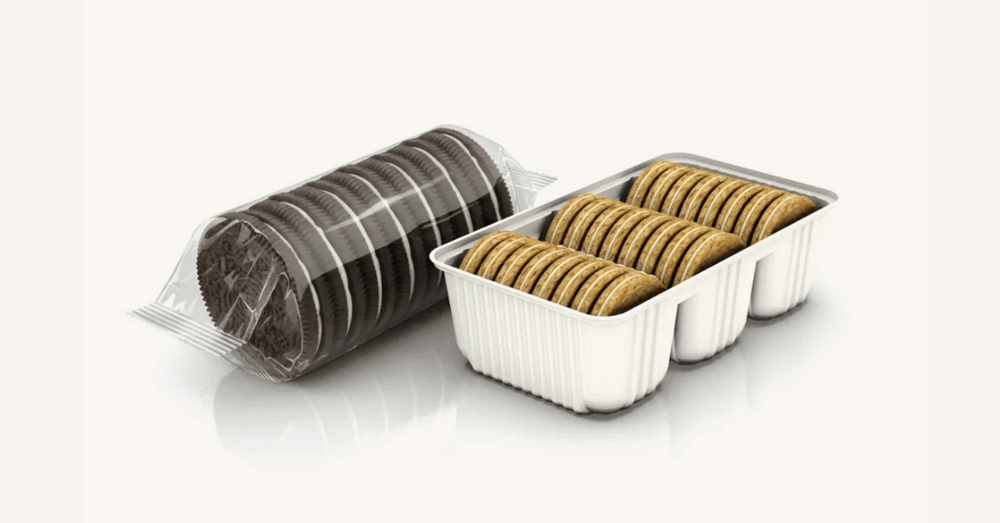
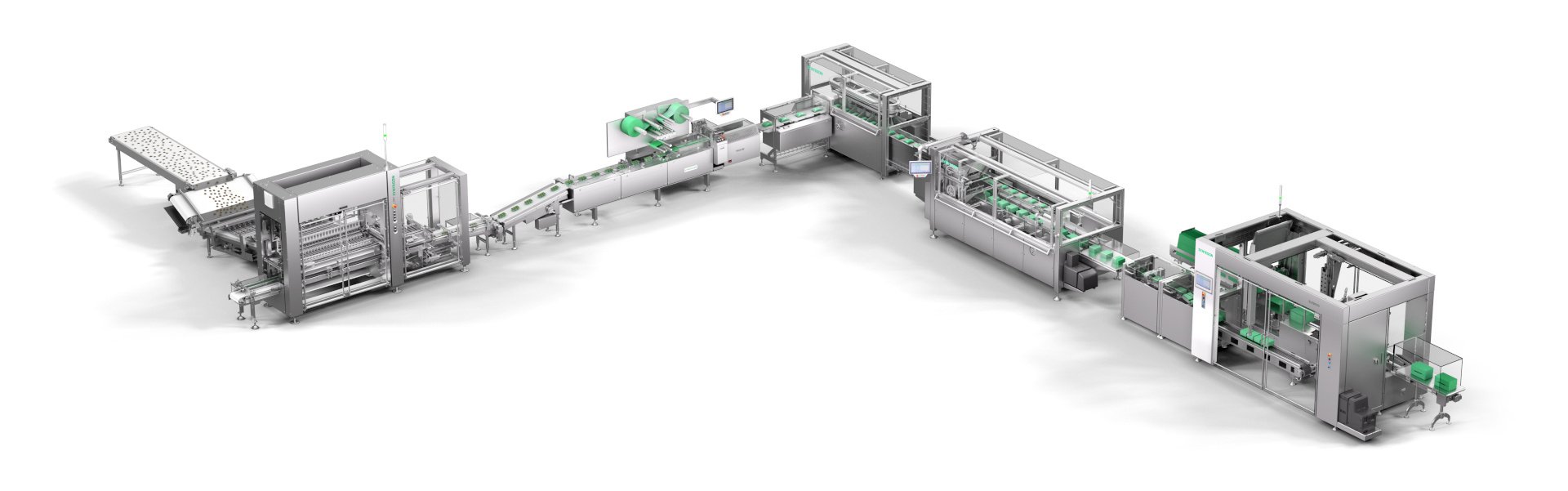
Different products call for different approaches: on-edge solutions for robust cookies and crackers at high throughput, flat-handling systems for delicate or filled products, vertical concepts for space-efficient line layouts, and pick-and-place systems and robotics for greater process flexibility.
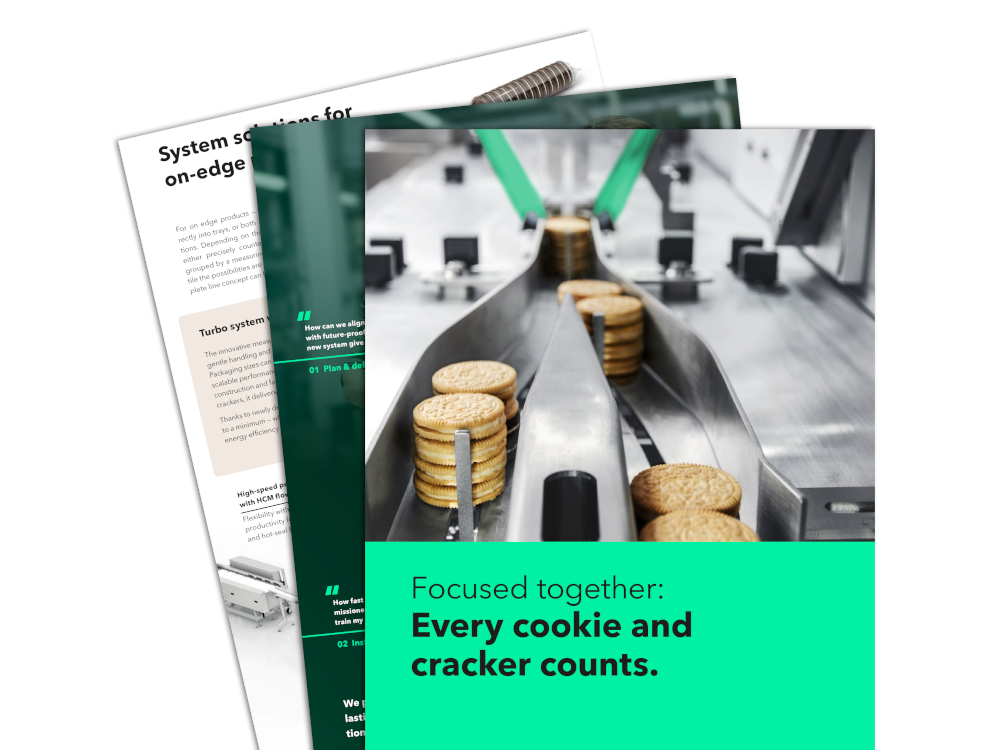
Every cookie and cracker counts.
Download and learn more on:
✔ Different handling technologies
✔ Practical examples of the different packaging systems
✔ Videos and success stories from the Cookie and Cracker industry
Pack sizes reveal a lot about markets
The products are not the only thing changing. Packaging requirements are becoming more diverse as well. In affluent markets, on-the-go formats, portion control and reclosable packs are growing in importance. Smaller packs can form part of a broader lifestyle strategy.
In other regions, small pack sizes are driven by different factors: lower purchasing power, local distribution structures and clearly defined price points. At the same time, large formats remain relevant in markets where family packs and stock-up shopping are common.
For international manufacturers, this results in portfolios spanning different weights, product counts, pack styles, materials and sales units. Lines optimised for a single standard format can quickly reach their limits.
Flexibility drives productivity
The broader the range of variants, the more important efficient format changeovers become. Manufacturers need to produce smaller batches economically, bring new products to market faster and respond quickly to shifts in demand. Long changeover times, numerous format parts and processes that depend heavily on individual operators all become productivity risks.
This changes the way packaging equipment needs to be assessed. Achieving maximum output with a single standard format is no longer enough. What matters is how reliably a line performs across a wide range of formats – and how quickly it can return to production after a changeover.
Sustainability is about more than choosing a material
Packaging itself is changing too. Recyclable mono-materials, thinner films, paper-based solutions and fibre-based composites are increasingly moving into focus. Yet more sustainable materials are not necessarily easier to process.
Alternative packaging materials can behave differently in terms of stiffness, friction and sealing properties. Processing windows become narrower, web tension and wrinkling more critical, and reliable seals more difficult to achieve. For cookies and crackers, the pack must still protect freshness, crispness and product integrity.
This calls for machinery capable of processing a broad range of materials, combined with the right sealing technology. Solutions such as Amplified Heat Sealing can help deliver consistent seal quality, particularly when working with mono-materials.
Ultimately, what matters is whether the material, the product and the machine work together under real production conditions.
The line becomes an intelligent ecosystem
New recipes also increase the demands placed on cleaning, hygiene and ease of operation. Gluten-free, nut-free and high-protein products require secure processes, clearly defined product zones and equipment that is easy to access.
At the same time, many manufacturers are struggling to find experienced personnel. Intuitive HMI concepts, guided format changeovers, fast cleaning, clearly structured maintenance processes and digital analytics are therefore becoming crucial to overall line performance.
Syntegon supports manufacturers with integrated system solutions for a wide range of pack styles, combining gentle handling, automation, material-specific sealing technology, service and digital solutions throughout the entire lifecycle.
This is not purely a technical matter. It is about translating market trends into manageable production processes. Because ultimately, every cookie and every cracker counts – for margins, brand reputation and consumer trust.
Syntegon Newsletter
Get inspired with regular updates on technologies and services, case studies, webinar offers and events.