See how stable vertical bagging processes can reduce packaging material waste, improve efficiency, and deliver consistent bag quality.
For manufacturers running vertical bagging lines, film isn't just packaging. It's a direct cost per bag, a sustainability metric under increasing scrutiny, and – often overlooked – a signal of how stable your process really is. A couple of meters of film lost here, a slightly misaligned reel change there. Individually, these look like rounding errors. Multiplied across 2 or 3 shifts a day, they become a real number on the Proft & Loss.
1. Where Does the Waste Actually Come From?
In most vertical form-fill-seal operations, material loss doesn't come from one dramatic failure – it accumulates from small, recurring inefficiencies:
- Manual reel changes that depend on operator experience and attention, leading to inconsistent film positioning
- Startup instability after a changeover, where the first bags of a new run often don't meet quality standards
- High-speed seal inconsistency, especially with thinner, more sustainable mono-materials that are less forgiving than legacy laminates
- Operator variability across shifts, machines, and skill levels – the same line can perform very differently depending on who's running it
The tricky part: these losses are gradual and distributed, which makes them easy to underestimate – until someone actually measures them.
2. What the Numbers Actually Look Like
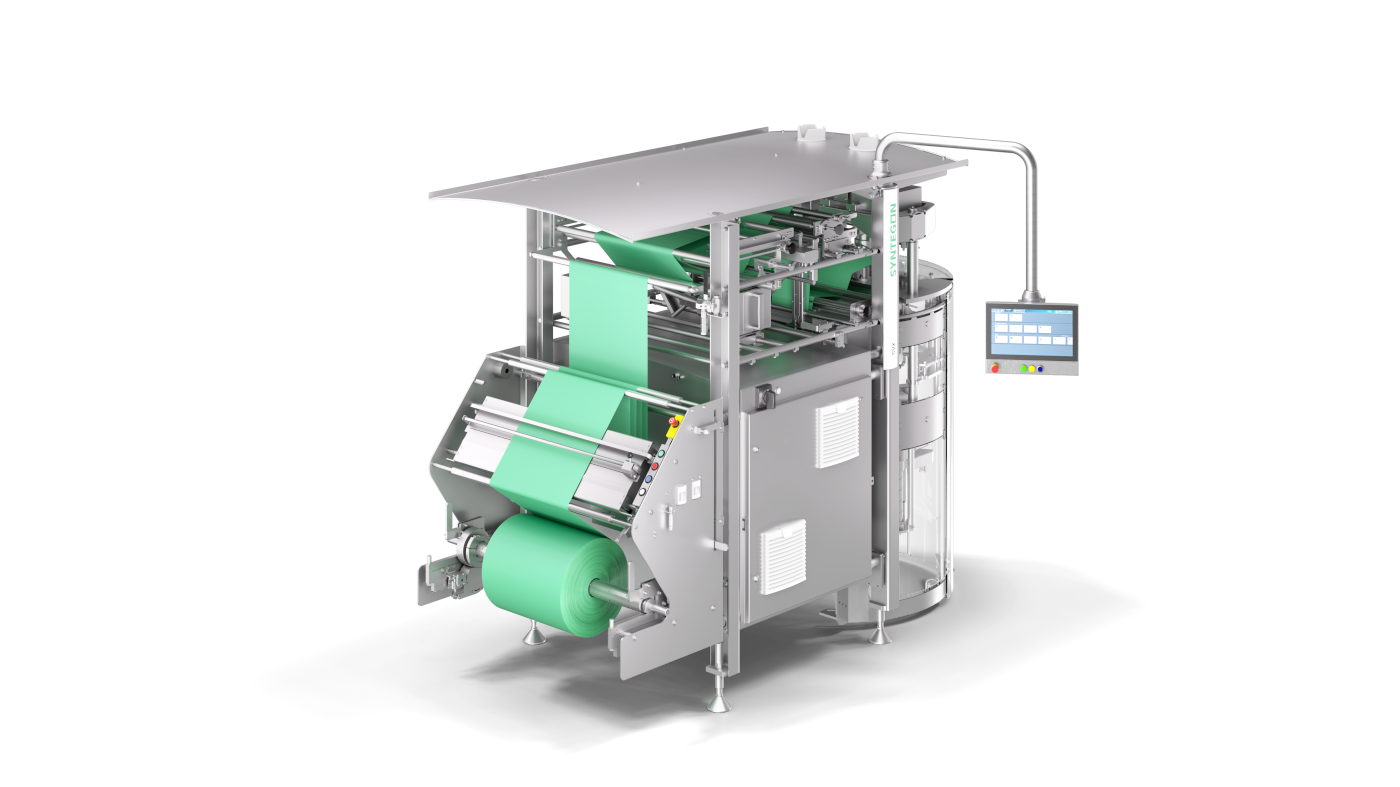
That's exactly what happened in a recent customer case. By introducing guided reel changes and built-in operator error prevention on a SVX vertical bagging line, the manufacturer cut packaging material waste by up to 20% – translating into 4,800 square meters of film saved per year.
To put that into perspective: that's roughly two-thirds of a soccer field, or enough film to cover 18 to 20 tennis courts – every single year, from one line.
On top of that, ensuring high, consistent bag quality from the very first bag of a run – not just once the process has "settled in" – reduced waste by an additional 25%. In other words, a meaningful share of material loss doesn't happen mid-run at all. It happens in the first few seconds after a changeover, before the process has stabilized.
3. Why Stability at Speed Is the Real Lever
These numbers point to something worth sitting with: waste reduction isn't primarily a material problem – it's a process stability problem. The more a line depends on manual precision and operator judgment, the more variability creeps in. And variability, at scale, is waste.
This is exactly the challenge that modern vertical baggers should be engineered to solve.
4. Slimmer than expected. Faster than assumed. Easier than ever.
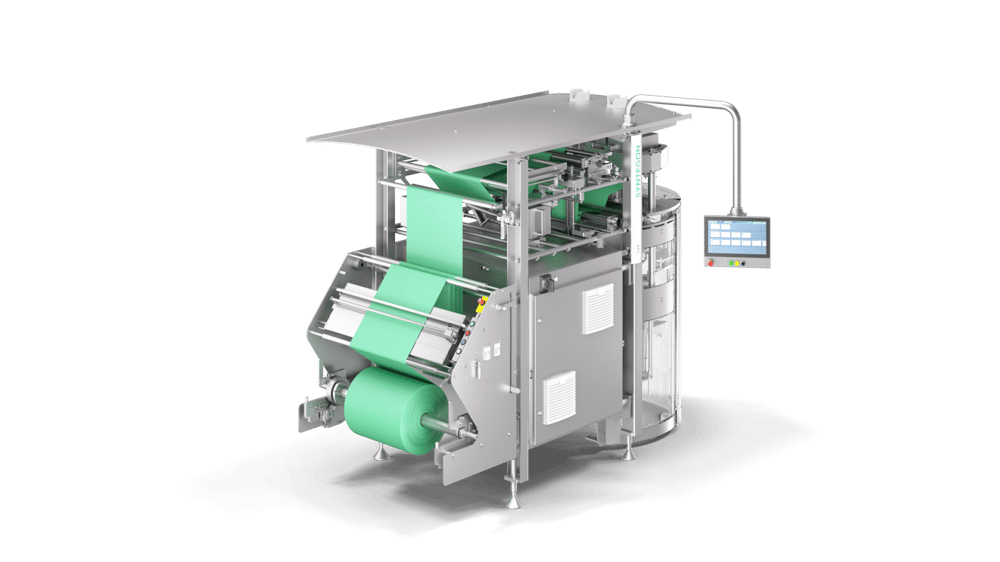
Our proven SVX platform comes with a cross-seal-drive that performs consistently and reliably at high speed – even with demanding, sustainable packaging materials – keeps seal quality stable run after run. Guided processes that reduce waste at every step take some of that dependency on operator skill out of the equation entirely, from reel loading to changeover.
The result isn't just less film in the scrap bin. It's:
- More output
- Less downtime
- Less waste
5. The Bigger Picture: Waste Reduction as a Design Principle
What's notable about the SVX’s proof points is that they weren't achieved through a single fix – they came from rethinking the process holistically: compact machine design that maximizes output per square meter, a drive system built for consistency under pressure, and guided operator workflows that reduce reliance on individual skill. Waste reduction, in other words, isn't a feature bolted onto a machine after the fact. It's a design principle that runs through the entire platform.
For technical decision-makers evaluating new lines or retrofits, this reframes the conversation: the question isn't just "how fast can it run?" but "how consistently can it run – and what does that consistency save me over a year?"
Curious what guided, stable, high-speed bagging actually looks like on the production floor?
We'll be demonstrating exactly this – live, in action – at PACK EXPO International 2026,
October 18 – 21 in Chicago (Booth S-3514). Learn more and plan your visit.
Syntegon Newsletter
Get inspired with regular updates on technologies and services, case studies, webinar offers and events.