

Discover how Syntegon barrier systems support Annex 1 compliance, reduce contamination risks, and enable safe aseptic filling processes.
Key Takeaways
- Barrier technologies are crucial for Annex 1 compliance, as they reduce human intervention and contamination risks
- Syntegon has more than 30 years of expertise in RABS and isolator technology
- Syntegon experts share their knowledge at industry events, for example at PDA training courses
- The portfolio includes Annex 1-ready systems and tailored upgrades for existing equipment
- Seamless line solutions from a single source including isolator ensures less interfaces and better lifecycle services
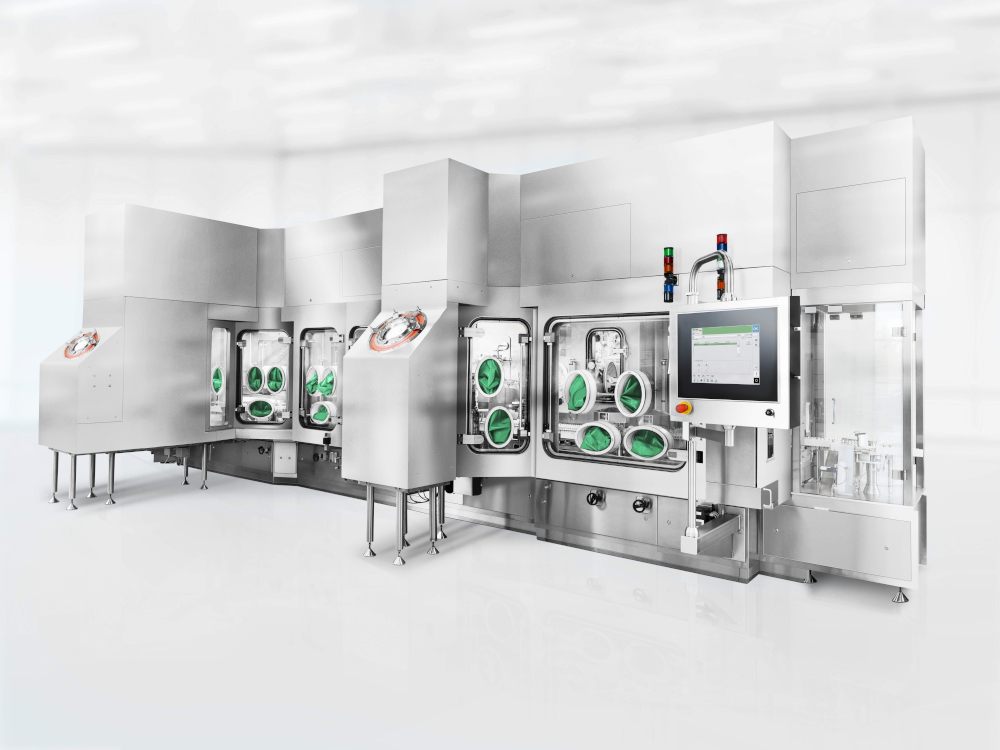
Annex 1 is still one of the most discussed topics in the pharmaceutical industry. One of the document’s primary objectives is to separate the aseptic process area from the operator environment. The goal is to reduce human intervention and the risk of product contamination to a minimum. Hence, pharma and biotech companies as well as CDMOs must make sure that their fill-finish process is equipped with suitable barrier technologies. But what exactly does this imply and what needs to be considered in the design, validation, and operation of barrier systems?
Sharing valuable knowledge
Syntegon looks back on more than 30 years of experience in barrier technologies. In fact, first trials with a soft-wall isolator were conducted at the site in Crailsheim, Germany, as early as the 1980s and the first fixed-wall isolator was developed in 1991. Since then, Syntegon has evolved into one of the leading providers of barrier technologies, which are in use at customer facilities all over the globe.
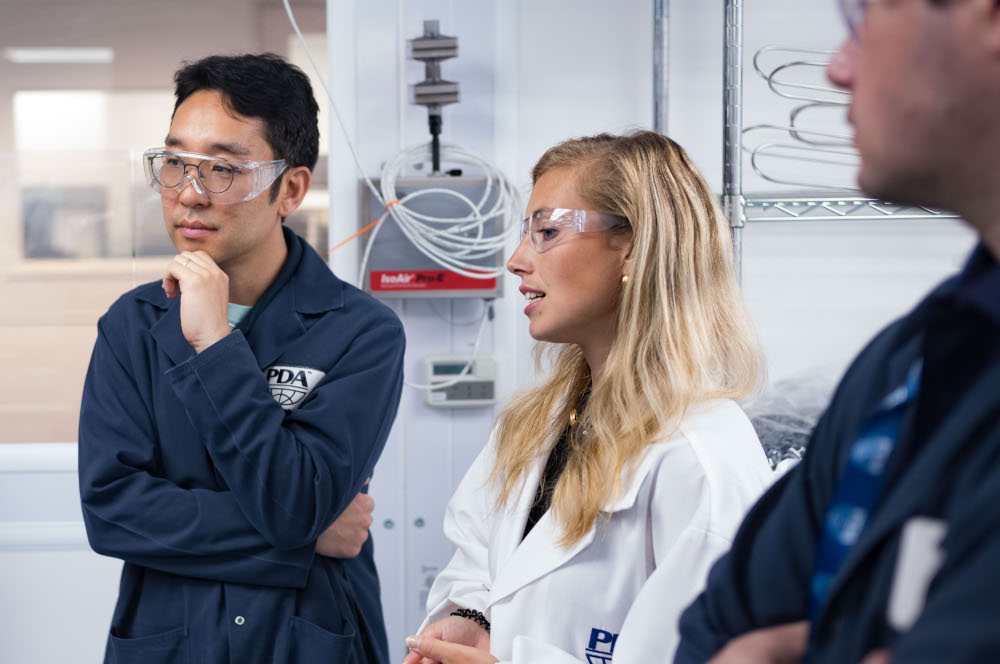
As in all areas of life, knowledge is most valuable when it is shared. This is exactly what our experts frequently do at conferences, trade shows, and in training courses. At the PDA training course in June, for example, Daniela Maier (Strategy and Global Product Manager Pharma Liquid), Dr Laura Moody (Director of Product Management Pharma North America), and Dr Johannes Rauschnabel (Director Advanced Technology Development and Innovation) took the participants on a two-day journey through the challenges and technological solutions of Annex 1-compliant isolator systems.
“It is a pleasure and very rewarding to discuss current challenges with pharmaceutical manufacturers, to share our knowledge, and to support them in optimizing their filling processes for maximum product safety.”
Daniela Maier, Strategy and Global Product Manager Pharma Liquid at Syntegon
Seamless Annex 1 compliance
In a mix of presentations and hands-on practical exercises, the participants learnt which barrier system is appropriate for which user requirements, which cleaning and decontamination methods are compatible, and how human intervention can be minimized with an ergonomic design. Further topics included airflow, aseptic transfer, isolator glove design and testing, and environmental monitoring. “The positive feedback to the training showed that we have the right approach: sharing our expertise in isolator technology and co-creating Annex 1-compliant filling processes together with our customers and partners,” Daniela Maier summarizes.
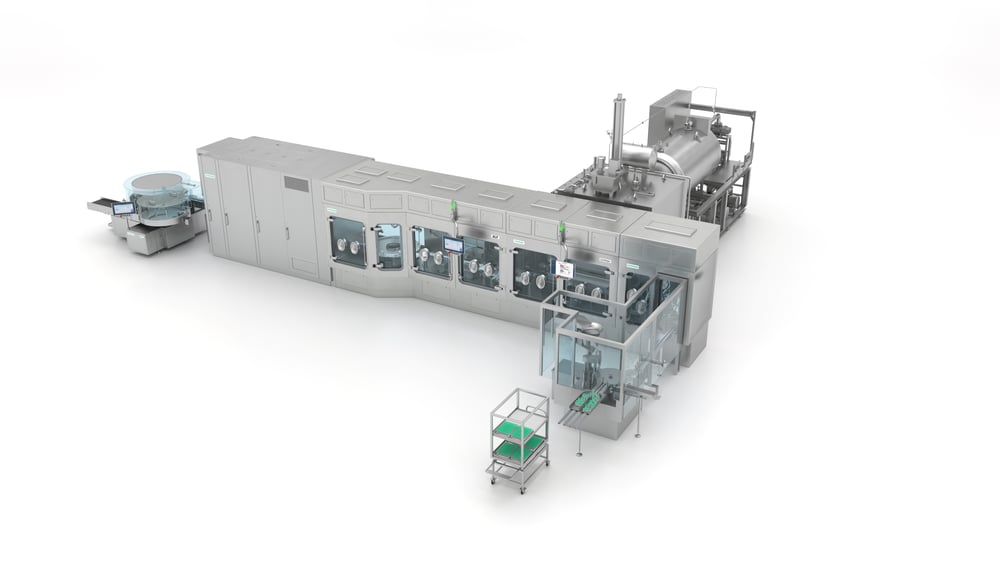
Needless to say, Syntegon not only has the know-how, but also the technological solutions in its portfolio, covering the entire pharmaceutical production process. While all new developments are “Annex 1-ready” from the start, customers can also rely on the experts to retrofit existing equipment, for example with RABS upgrades. They can choose between an open or closed system in a passive or active design with associated air handling. The design of the RABS components, such as material locks and glove and transfer port integrity testers, is also based on individual customer specifications.
Would you also like to learn more about barrier systems and Annex 1 compliance? Contact our experts or join the next PDA training course on December 16-17, 2026.
Syntegon Newsletter
Get inspired with regular updates on technologies and services, case studies, webinar offers and events.