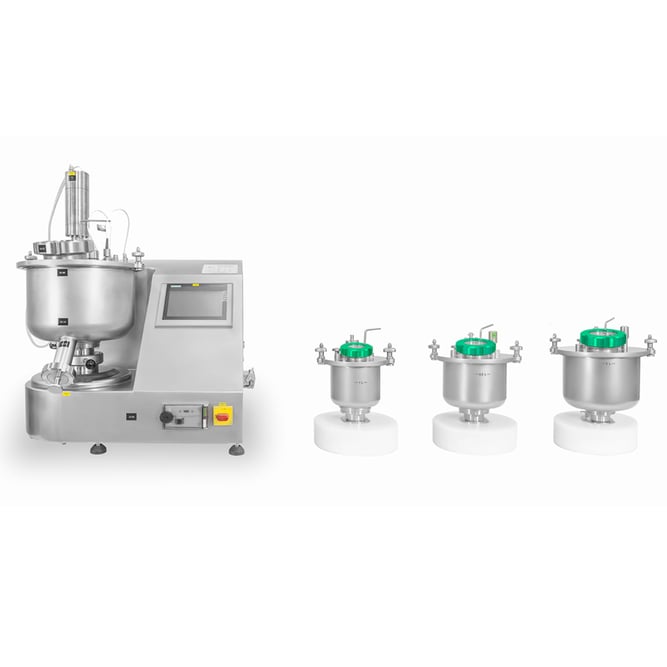
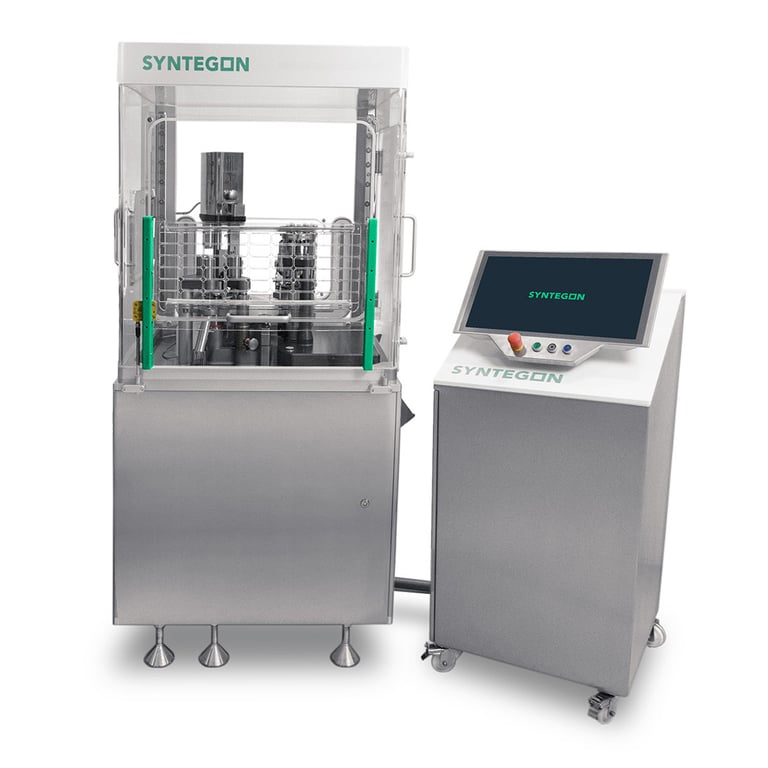
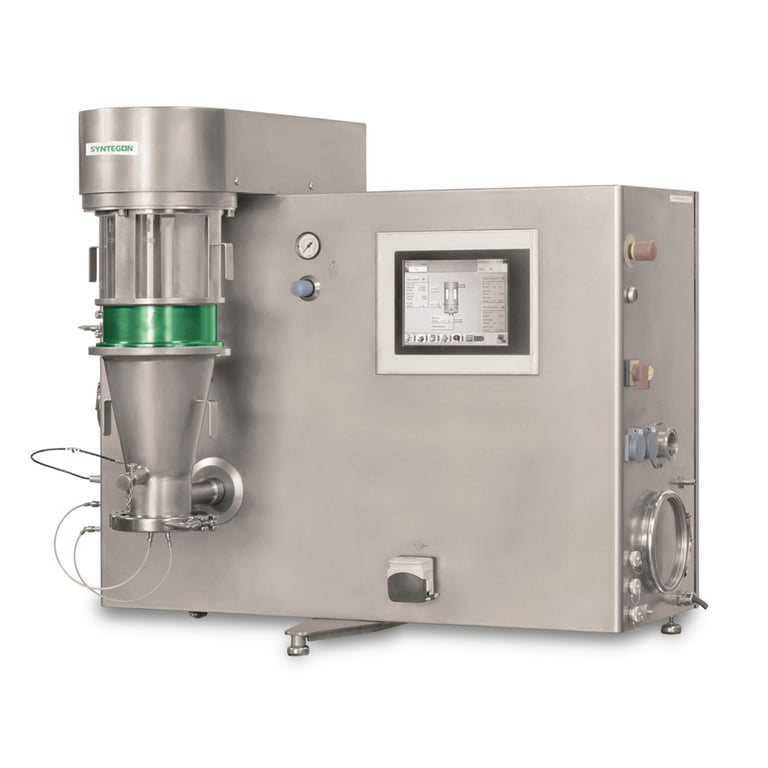
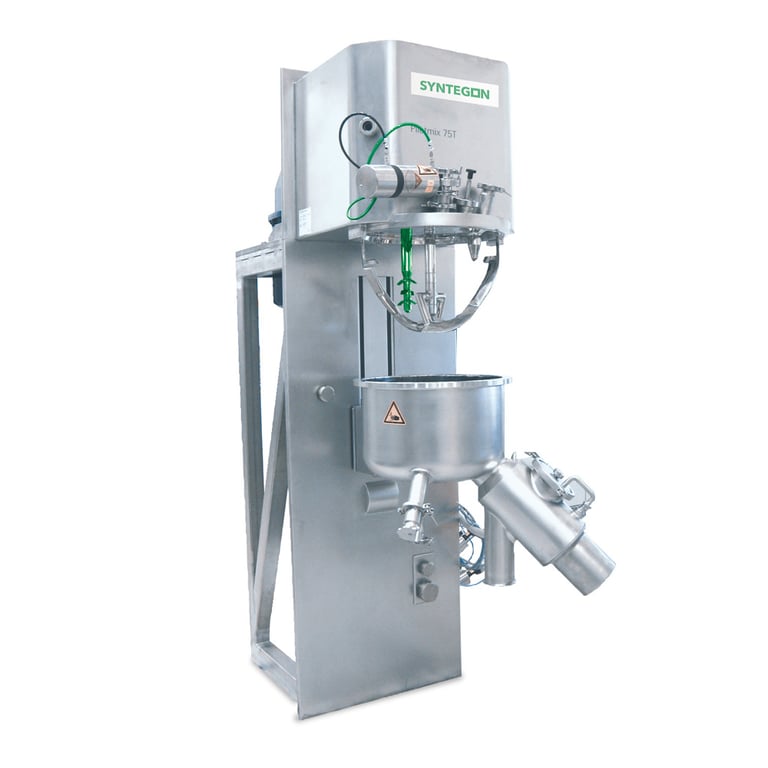
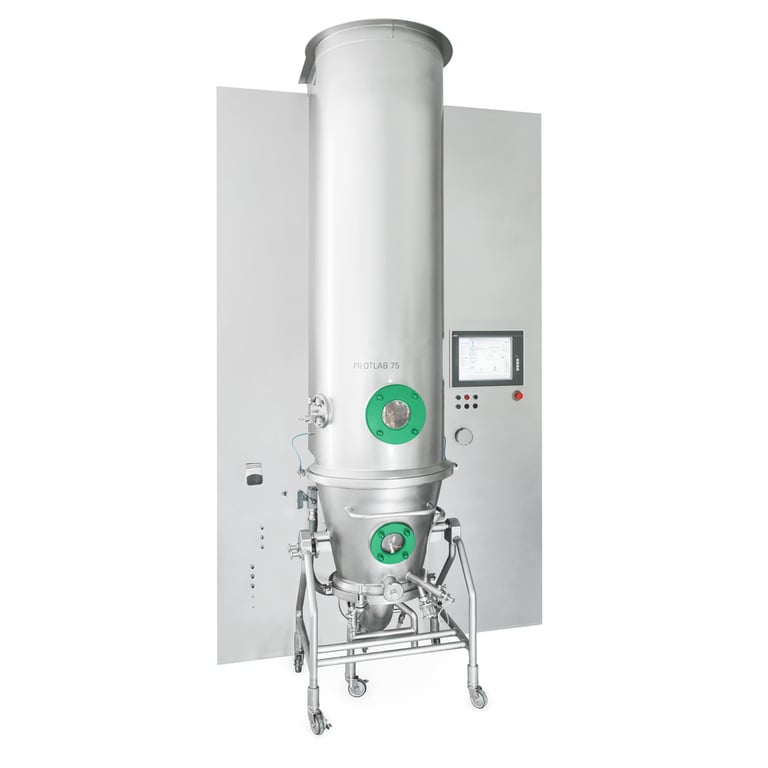
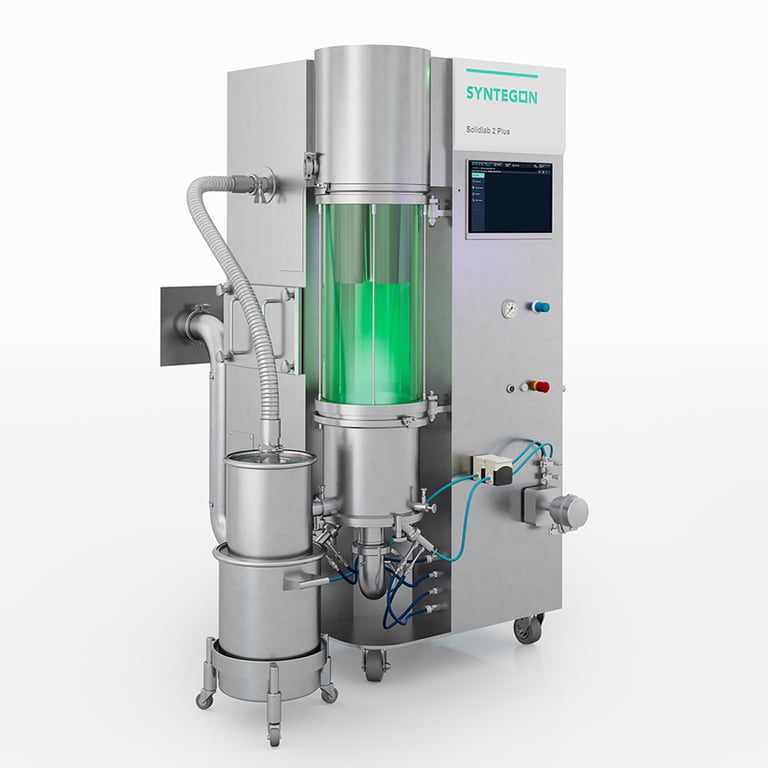
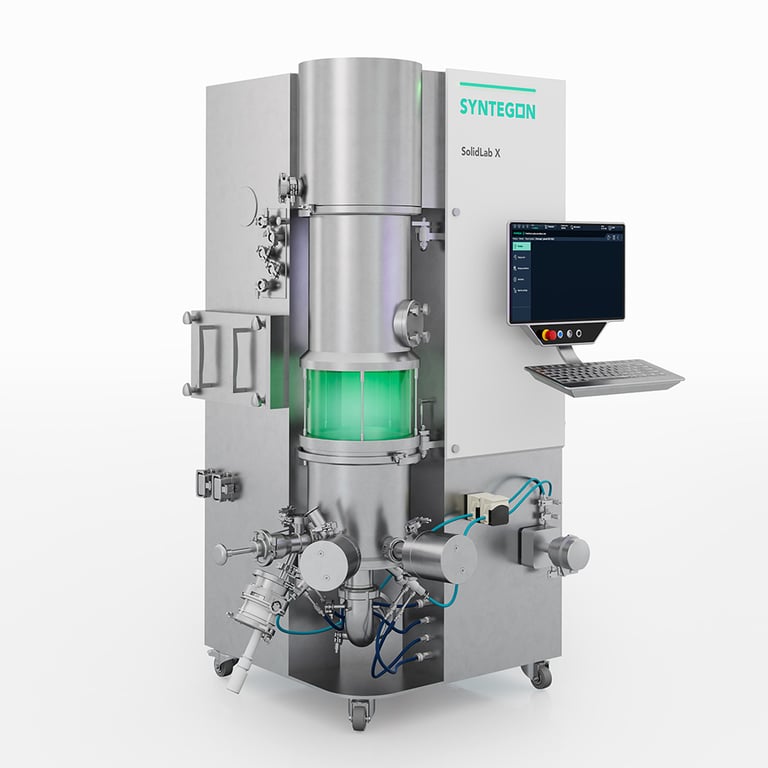

Every OSD product starts in the lab. But bringing a formulation from development to commercial manufacturing requires more than equipment.
Key takeaways
- Syntegon supports pharmaceutical manufacturers throughout the entire OSD lifecycle – from formulation development to production scale to process optimization.
- Consistent technologies and transferable process concepts enable efficient scale-up across batch sizes.
- Deep process expertise helps manufacturers accelerate development, validation, and commercial transfer.
Faster development timelines and increasing efficiency demands are putting growing pressure on OSD manufacturers. They need to generate reliable data for clinical studies, validate processes, and ensure that development results can be transferred to commercial manufacturing. At the same time, existing processes must be continuously optimized to remain competitive and comply with regulatory requirements.
As a strategic partner to the pharmaceutical and biotech industry, Syntegon supports manufacturers with technologies that follow consistent process principles across different scales and batch sizes, and process expertise that guides manufacturers every step of the way. This support begins long before equipment is installed. Manufacturers can either develop, validate, and scale their processes together with Syntegon in its global OSD Customer Centers or apply the same technologies and processes in their own production environment. In both cases, they benefit from consistent process principles and seamless technology transfer throughout the entire OSD lifecycle. This approach creates the foundation for reliable development, efficient scale-up, and process optimization, with dedicated technologies supporting every phase from R&D to commercial production.
R&D and formulation development: building the foundation
Successful OSD products require a deep understanding of formulations and process behavior. During R&D, manufacturers need to evaluate formulations in the lab, identify critical process parameters, and generate reliable data while minimizing the use of valuable APIs. Decisions made during formulation development can determine the success of later scale-ups. Therefore, establishing robust process parameters early on creates the foundation for efficient validation, reliable transfer, and future scale-up.
Pilot scale: proving transferability
Once a promising formulation and process have been established, manufacturers need to prove that development results can be reproduced at larger scales. Pilot operations play a critical role in generating clinical trial material and validating process parameters. At this stage, focus shifts from development to transferability: Manufacturers need proof that a process will behave predictably as batch sizes increase and production requirements become more demanding. Generating reliable scale-up data and validating processes under the right conditions creates the basis for a smooth transfer to large-scale manufacturing.
Small-batch manufacturing: bridging development and production
Before moving to full commercial scale, many manufacturers need to produce clinical or small commercial batches. Unlike with pilots, the focus is not on proving transferability, but on manufacturing a product under real production conditions. Small-batch manufacturing aims at gaining operational experience, supplying clinical studies, and refining production strategies while minimizing risk and investment, while also providing an opportunity to evaluate and optimize manufacturing processes under real production conditions before commercial scale-up.
Scale-up and transfer: translating process knowledge into production
Scale-up is where development work is put to the test. Processes that have been validated in pilot and small-batch operations must be transferred efficiently to larger production volumes while maintaining consistent product quality, recipe and process parameters. Any deviation can lead to delays, additional validation efforts, or expensive adjustments. This requires technologies that follow the same process principles across scales, combined with the expertise to move into commercial production with lower risk.
“The same process knowledge that accelerates product development can also reduce risk during transfer and unlock optimization opportunities years later in commercial production.”
Christian Paasche, Technical Product Manager at Syntegon
Production: driving continuous improvement
Reaching commercial production is not the end of the journey. As market demands and regulatory requirements evolve, manufacturers are continuously challenged to adapt to new products, improve efficiency, increase yield, and maintain product quality. Many improvements can be evaluated at small scale, allowing manufacturers to test changes and validate optimization measures with lower material costs and less risk than full-scale production trials.
Services for process optimization
As a strategic partner throughout the OSD lifecycle, Syntegon builds on the process knowledge gained from early development through commercial scale-up to help manufacturers optimize production performance, improve efficiency, and adapt existing processes to evolving products, regulatory requirements, and market demands.
Visit Syntegon at CPHI to discover how manufacturers can benefit from a seamless R&D approach that combines process expertise and technologies under one partner, creating a reliable path from early development to commercial manufacturing – or contact our experts to explore the right approach for your application.
Syntegon Newsletter
Get inspired with regular updates on technologies and services, case studies, webinar offers and events.