RTU packaging for syringes, vials, and cartridges requires precise interaction between container and machine. Discover key challenges and solutions.
Key takeaways
- RTU packaging simplifies aseptic filling but places high demands on the interaction between container and machine
- Feeding, filling, and closing processes can vary significantly from syringe to vial to cartridge
- Close collaboration and further DIN/ISO standards are crucial for safe and flexible processes
- Senior Product Manager Klaus Ullherr explores this topic in depth in his latest article in “pharmind”
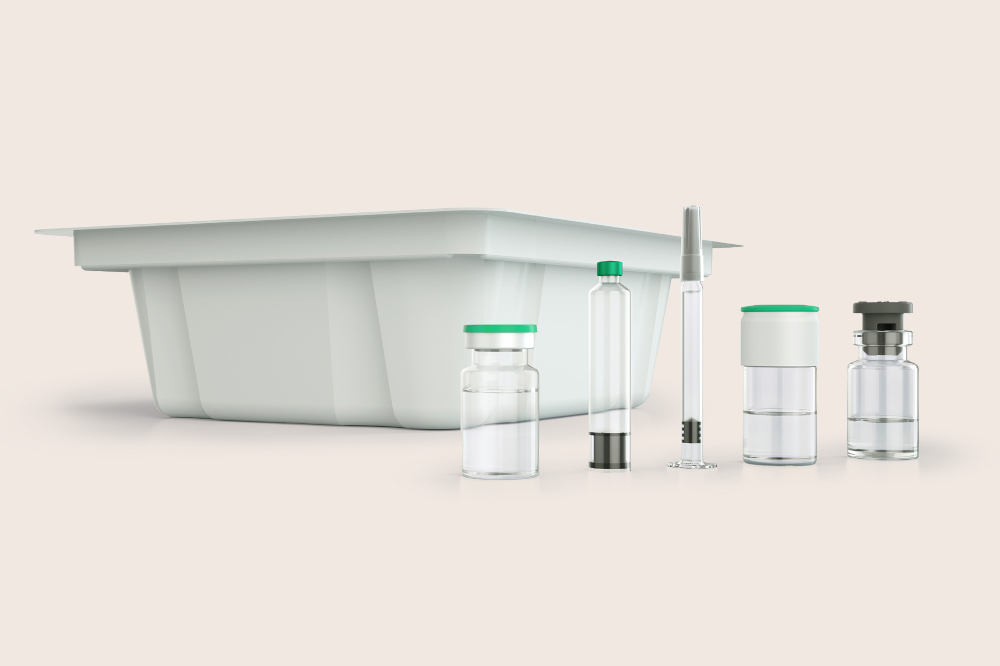
The use of ready-to-use (RTU) packaging materials for liquid pharmaceuticals is increasing steadily. While initially only pre-sterilized syringes were available, vials and cartridges have also been on the market for more than ten years now. The use of these packaging materials saves pharmaceutical manufacturers and CDMOs the upstream process steps of cleaning and sterilization and simplifies handling, particularly in the case of syringes.
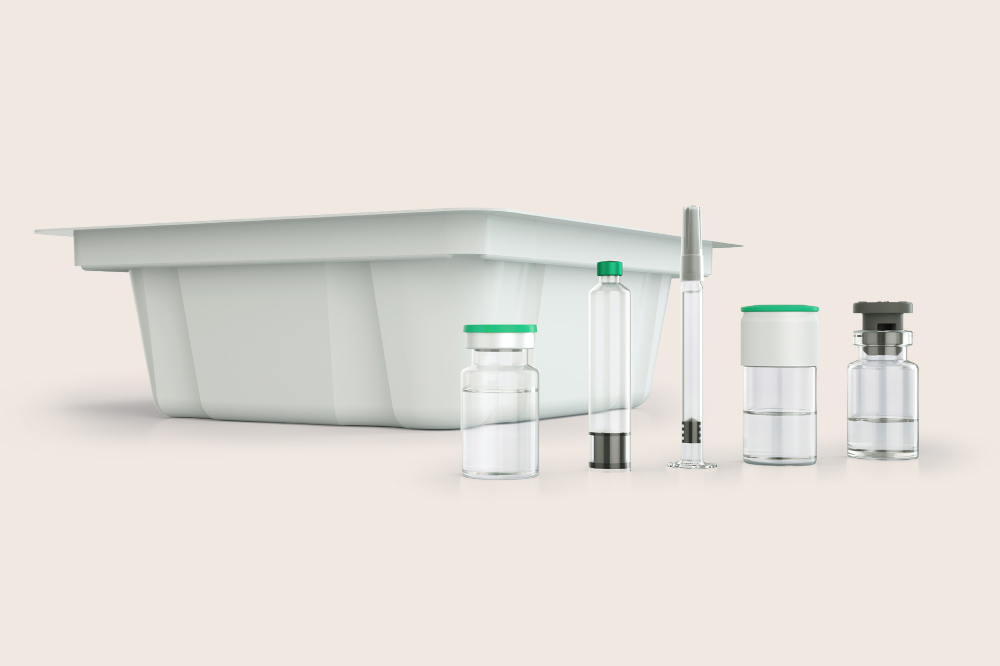
Nested glass syringes have been on the market the longest and are easy to handle. In comparison, pre-sterilized glass vials have one key difference: They are available not only in nests but also in significantly larger trays. Pre-sterilized cartridges, on the other hand, are typically pre-crimped and offered in nests. When it comes to processing, all RTU containers have one thing in common: They require precise coordination between the container and the machine.
Challenging container infeed
The first step consists in removing the outer bag packaging. Here, double bags have become increasingly common to enhance product safety, especially in systems without external tub decontamination. In high-speed machines, bag removal is now often fully automated. The e-beam tunnel and, in particular, No Touch Transfer (NTT) have established themselves as industry standards for this purpose. Thanks to many years of practical experience, the NTT is now often used even without additional external decontamination; the outer and inner bags are removed automatically.
However, the role of the bag as a sterile barrier remains a topic of debate. Since it has so far been considered merely a safeguard against contamination, this creates uncertainty, particularly among inexperienced users. An industry-wide standardization of the bag as the primary sterile barrier could close this gap. Once the outer packaging has been removed, the tub is opened in a Class A cleanroom. This step is essentially identical for all tub/nest systems.
Filling systems at a glance
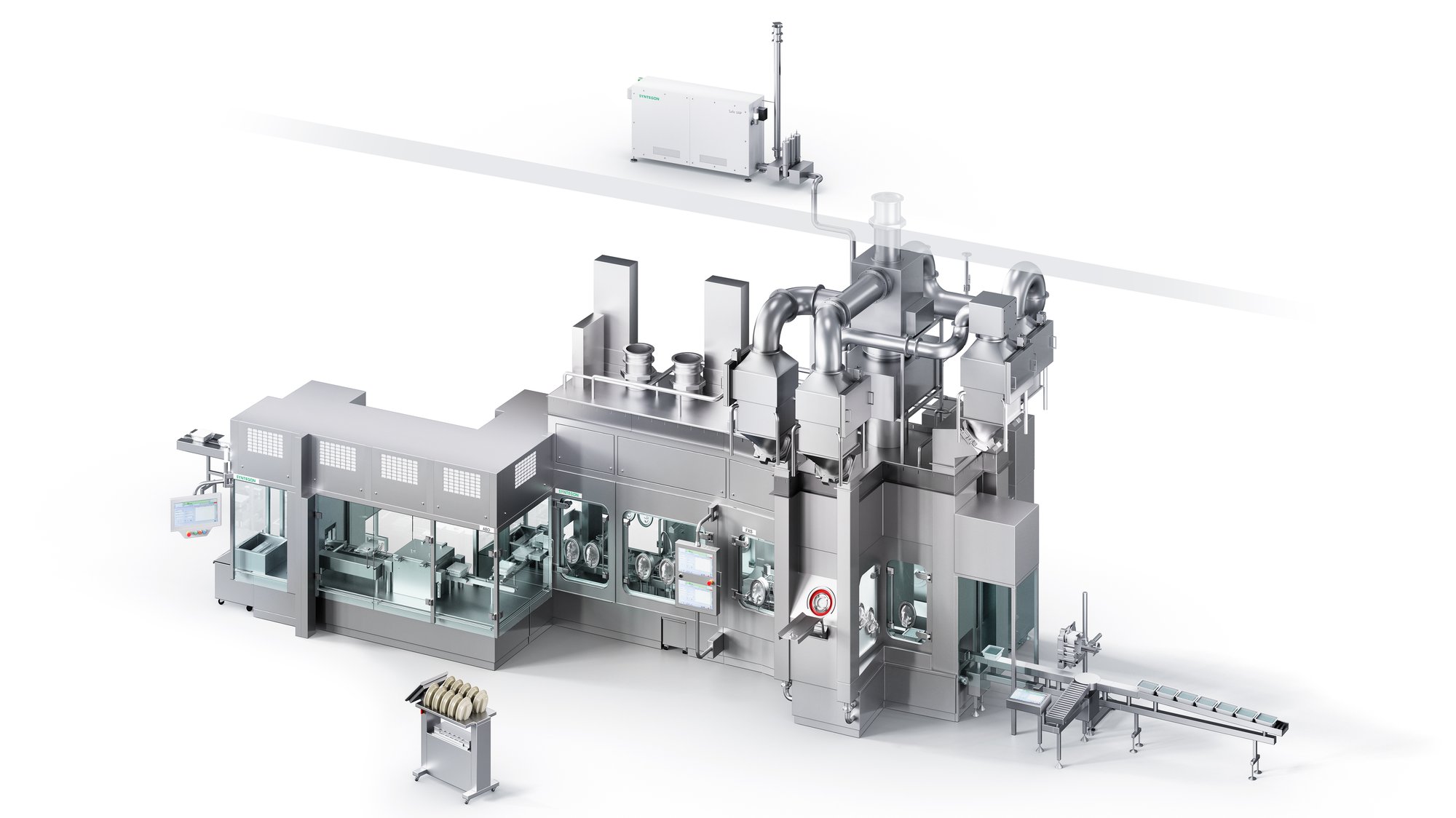
- Conventional piston pumps are well suited for accuracy and speed, but less so for filling proteins, whose complex structures are sensitive to shear forces.
- Time-pressure filling systems are often used in isolator lines with multiple filling stations, as they offer a simpler CIP/SIP process.
- Peristaltic pumps, together with single-use filling systems, set the standard for protein filling. They require no cleaning or cleaning validation, and the pumps exert low shear forces.
- Combi filling stations are the ideal solution, as they can be flexibly equipped with the appropriate filling system depending on the application.
Considerable differences in closing
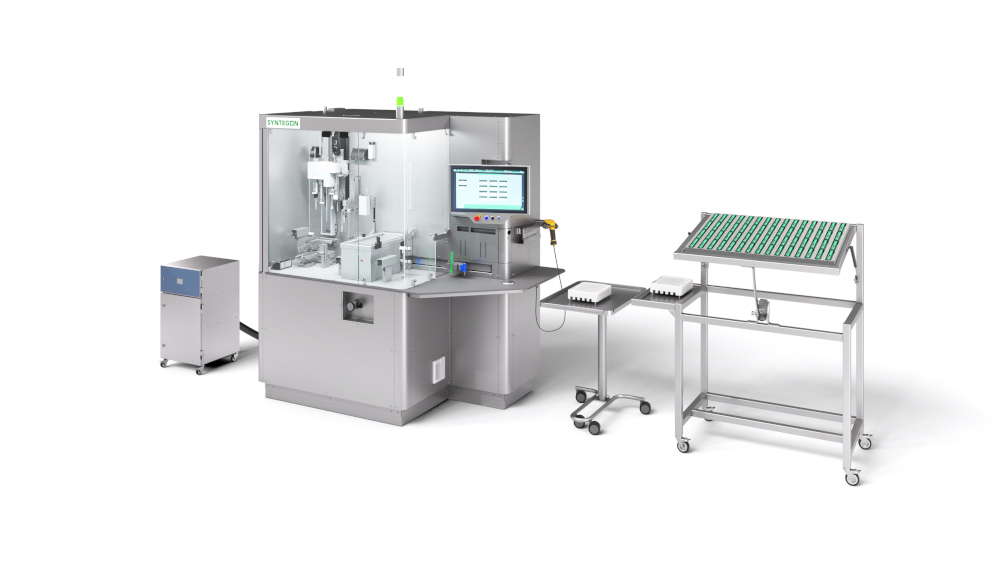
A plunger stopper is used for syringes. Since the air must not be compressed during insertion, this is usually done using a setting tube. Alternatively, the stopper can be set by vacuum. This reduces compression, protects coated stoppers from creasing, and results in a smaller residual air bubble. For syringes in a nest, the curvature of the nest also affects the stopper position, which in turn is relevant for later use in an autoinjector. The filling machine can reduce this curvature by applying force.
Although it is relatively easy to apply stoppers to vials while they are still in the nest, crimping is difficult at higher output rates. For this reason, they are usually removed from the nest without being crimped and then fed into a crimping machine or crimping module. In the case of lyophilized vials, they first pass through the freeze-dryer. While cartridge sealing is fundamentally similar to syringe processing, it is more challenging due to the lack of a finger flange, greater tolerance variations, and the difficulty of minimizing residual air bubbles.
Achieving optimum handling together
The variety of RTU primary packaging materials is constantly increasing. At the same time, there is a growing need to be able to process different types of containers on the same filling line. To ensure smooth processing, close cooperation between primary packaging and machine manufacturers is crucial. It is equally important to jointly further develop DIN and ISO standards and work toward standardized outer packaging in the long term.

“Only through partnerships can we meet the growing demands for flexibility, quality, and process reliability in handling RTU packaging materials. This benefits pharmaceutical manufacturers and, ultimately, patients.”
Klaus Ullherr, Senior Product Manager at Syntegon
Comprehensive RTU expertise
Klaus Ullherr has been with Syntegon for more than 25 years and has worked in product management for syringes and RTU packaging since 2002. As an expert in the processing of syringes and nested containers, he is active in various committees and organizations such as DIN/ISO, PDA, and ISPE. He regularly shares his expertise with representatives of the pharmaceutical industry as a speaker and trainer at conferences and works closely with primary packaging manufacturers. He plays a key role in the development and expansion of Syntegon’s portfolio for the processing of RTU containers.
Since Klaus enjoys sharing his expertise not only verbally but also in writing, he recently published a detailed article on RTU packaging in the renowned trade journal “pharmind” – and is happy to share his knowledge with you. Download the article now and learn much more about the challenges and solutions involved in handling pre-sterilized packaging materials.
Syntegon Newsletter
Get inspired with regular updates on technologies and services, case studies, webinar offers and events.